


Dimidium facti, qui coepit, habet; sapere aude, incipe. —Horace, Epistles I.2 (c. 20 BCE)
[A 7-minute read]
The line above is one almost everyone has met in fragments, without knowing that the pieces belong together. The first half—well begun is half done—is familiar as a proverb. The second—sapere aude, or dare to be wise—has been embraced as a motto for the Enlightenment, an Oxford college, and a thousand commencement addresses. What is less noticed is that Horace wrote these words as a single thought, ending on a command: incipe. Begin.
I had encountered both fragments many times, before one of them stopped me. The snag was small and stubborn. Why should wisdom require daring? Daring is for things with inherent risk—a leap, a venture, a crossing. But knowing seems safe, and being wise seems safer still: the calm figure on the mountaintop, untroubled, having arrived. Where is the danger that the word dare insists on here?
That small irritation turned out to be a door. This essay is an account of walking through it. I want to explain why the obvious objection is half-right, why the other half is wrong in a way that changes the meaning of the line, and why no English translation quite survives the journey. And then—because every substack must start somewhere—why this essay is the one I wanted to open with.
Isn’t Wisdom Safe?
My intuition ran like this. Wisdom is something you have; acting is something you do. And surely the risk arises on the doing side—so Horace should have attached the courage to the deed, dare to act on what you know, not to the wisdom itself.
I held this view with some confidence. It has the shape of common sense. It is also, I now think, exactly the comfortable assumption the line was built to disturb.
What Horace Actually Meant
Let’s begin with where the words appear. Epistle I.2 is a letter to a young man named Lollius. Horace spends it mining Homer for plain moral lessons—reading the Iliad and Odyssey not as adventure but as a catalog of what greed, anger, and appetite do to people who won’t let go of them. The wisdom on offer is not esoteric. It is old, public, lying around for anyone willing to stoop and pick it up.1
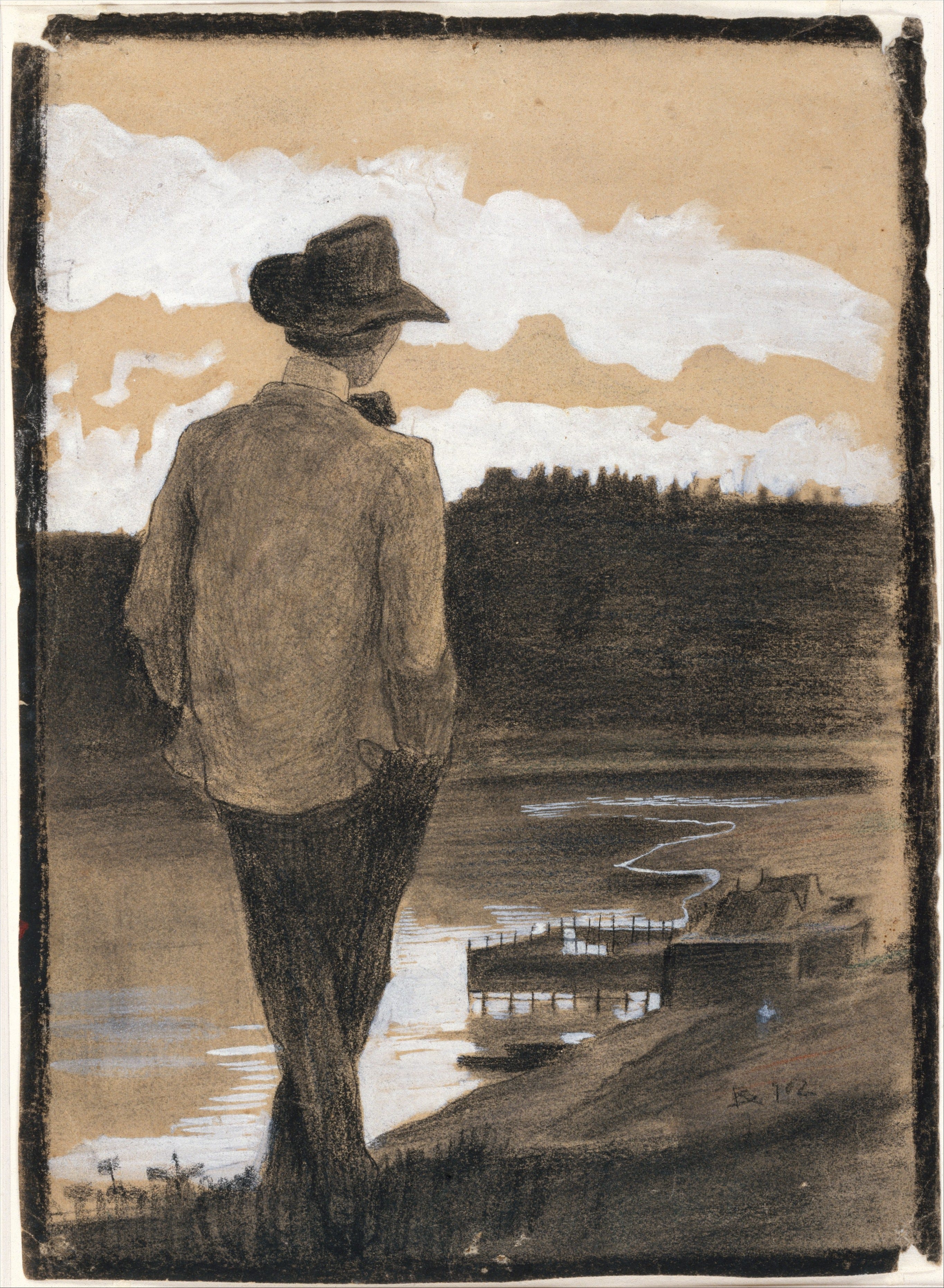
In that setting, Horace gives us an image I have not been able to shake. He tells of the man who keeps postponing the work of living well. The man is like a yokel sitting beside a wide, shallow stream, waiting for the water to run dry so he can cross without getting wet. But the stream runs on as it always has. The joke—a cruel little one—is that the man knows he should cross. He is not lost. The water is too shallow to drown in; he is not searching for a ford. He is stalling, waiting to cross without ever leaving dry land behind. His failure is not a lack of vision. It is that he will not take the step.2
So sapere, in Horace’s own hands, is closer to its practical root: to be sensible, to live wisely, and to put one’s moral house in order. The enemy is not ignorance or fear. The enemy is inertia. The daring he calls for is the plain, unglamorous nerve to begin living in the way you already know you should. Anyone who has tried to change a habit knows this is among the hardest forms of courage.
Kant’s Detour
The phrase did not stay in Horace’s modest, practical key. In 1784, Kant picked it up for his essay “What Is Enlightenment?” and made it the rallying cry we inherited. Sapere aude, he glossed, means have the courage to use your own understanding. And he was explicit about why courage was needed: the obstacle, he wrote, is laziness and cowardice. It is easier and safer to let others do your thinking—a book to understand in your place, a pastor to keep your conscience, a doctor to decide how you should live—so that you need never exercise the judgment that is yours to exercise. To step out of that "self-imposed immaturity" is daunting, because it means owning your conclusions and setting yourself against the powers who would rather you didn't.3
Kant sharpened the phrase. He made the risk intellectual and social: the danger of thinking for yourself in a world that punishes it. This is the sapere aude most of us know. It is a magnificent reading. It is also not quite Horace’s. Between 20 BCE and 1784, the line took on a meaning its author never intended. The louder, later meaning has drowned out the quieter, original one ever since.
The Wisdom That's Risky
Here is where my objection earns its keep, and where it breaks.
I was right that the risk lies in the doing. What I got wrong is assuming the doing is separate from wisdom. You don’t first acquire wisdom, safe and complete, and then face the scary question of whether to act on it.
In Horace’s tradition, there is no gap. Sapere is not something you hold and later apply. It is a life you live. To the Stoics who influenced Horace's letters, heirs to the Socratic claim that wisdom is a way of living rather than a body of thought, the wise man is defined by how he meets fortune, desire, and fear—not just by correct opinions. To truly know the good is already to do it—so much so that weakness of will is seen not as unused knowledge but as superficial knowledge. Acting is part of wisdom. There is no quiet shelf where wisdom waits, harmless, for risk to appear later.4
Which means the daring attaches to wisdom for the most direct possible reason. To become wise, in this sense, is to dismantle the life you are currently living—to give up the greed and the anger and the comfortable self-deceptions. That is terrifying. And it is terrifying as lived wisdom, not as some application of it.
Crossing the metaphorical stream costs the man his identity—he can no longer be the man who sits dry on the bank. But what blocks him is not quite fear. It’s the comfort of the dry bank and the delusion that the water will dwindle. Inertia is how he keeps the fear at arm's length.
The Stoics blamed the mind; Kant blamed cowardice; Horace, characteristically, blamed something more ordinary—inertia, the failure to begin.
So my objection was half-right and, instructively, half-wrong: the risk is indeed in the doing, but the doing is not one step past the wisdom. It is the wisdom.
Why English Fights Us
There is still a reason the line keeps misreading itself in our language, and it is worth naming, because it is not a confusion but a genuine fact about the distance between Latin and English.
The word wisdom currently suggests serene knowledge. It hints at a state achieved, a calm reached, a danger survived rather than entered: the sage on the mountaintop, settled and untroubled. Ancient sapere is the opposite. It is strenuous, active—an exercise of discernment that costs something every day. It is more verb than noun. No modern word in the “wisdom” or “knowledge” family carries that energy. So every English translation that uses these words quietly adds a tranquility the Latin never had. The ear notices and decides that dare must be wrong. But it is not dare that is incorrect. It is wisdom that has grown soft.
That is why smooth translations fail. “Dare to be wise” sounds like daring to possess something. “Dare to live wisely” suggests the wise life is already known, needing only nerve to execute. “Dare to pursue wisdom” or “discover a path” are worse: they make wisdom into something out ahead, a lifelong chase—when the point is that wisdom is a life you step into and inhabit.
What you want is a verb that means “shoulder this and be inside it at the same time”. After much circling, the one I settled on was “take on”. You take on a burden, a cause, a commitment; the moment you take it on, you are in it. So:
Whoever’s begun is halfway done; dare to take on the wise life—begin.
The risk now sits where Horace put it: in the taking-on. Not in some separate act that implements a prior wisdom, but in the entering itself.
And now the line comes back together. Read in pieces, it is three separate sayings: a proverb about initiative, a motto about wisdom, and a command to start. Read whole, it is one thought. The beginning is already half the deed. The wisdom you are beginning is not a thing to be had but a life to be entered. So—begin. The proverb promises that the first step already carries you halfway; the sapere aude tells you what you are starting; the incipe turns the seeing into the doing. Three fragments, one motion: from the beginning is half the deed, through wisdom is a life, to so begin.
Beginning Novotia
I have a folder of ideas and questions I have wanted to explore through writing for years—on technology and its strange acceleration, on philosophy and economics, on how we learn and why we forget, on the examined life.
The topics were never the problem; they were the stream. I have been the man beside it for years, since I retired and the content of my days stopped being given to me. Not afraid, exactly—just comfortable and dry on the bank, telling myself the water would dwindle: that the right time would come, that I needed more certainty, a cleaner moment. But the water was never going to vanish.
Novotia is me stepping into the current. The name comes from Cicero’s otium: the cultivated leisure of the thoughtful mind. Not idleness, but the freedom to read, reflect, converse, and write without haste. The plural, otia, points to a series of such interludes in conversation with one another. The nov- admits that this is leisure for a new age. Sometimes the conversation even includes a machine. This very essay was developed through a long exchange with Claude, an AI created by Anthropic.
But the substack name, Novotia, however carefully coined, is only a sign at the water’s edge. Underneath it is the wager: whoever’s begun is halfway done. The ideas can wait forever. The water will never run dry. The only thing ever required was the nerve to step into a way of thinking and living that I cannot possess until I have already begun to inhabit it. The nerve, that is, against nothing but myself.
So this is the beginning. Incipe. 5
Horace, The Epistles of Horace, Book I, Epistle II, trans. A. S. Kline (Poetry in Translation, 2005). Available at https://www.poetryintranslation.com/PITBR/Latin/HoraceEpistlesBkIEpII.php#anchor_Toc98156391.
Horace’s amnis is rendered “river” by Kline; I make it a wide, shallow stream. Horace’s emphasis falls on the futility of waiting, not on any danger in the crossing. A stream too shallow to drown in but too wide to cross dry sharpens the point: nothing endangers the man, yet he will not trade being dry on the bank for being wet midstream—which is to say, he will not begin.
Immanuel Kant, “An Answer to the Question: What Is Enlightenment?” trans. Ted Humphrey, in Perpetual Peace and Other Essays (Indianapolis: Hackett, 1992), 41. Available at https://www.nypl.org/sites/default/files/kant_whatisenlightenment.pdf.
John Sellars, “What Is Philosophy as a Way of Life?” Parrhesia: A Journal of Critical Philosophy 28 (2017): 40–56. Available at https://www.parrhesiajournal.org/parrhesia28/parrhesia28_sellars.pdf.
© 2026 Solom Heddaya. All rights reserved.
Novotia™ is a trademark of Heddaya Projects LLC.